
What is SSE? – School Self-Evaluation at St. Joseph’s Secondary School
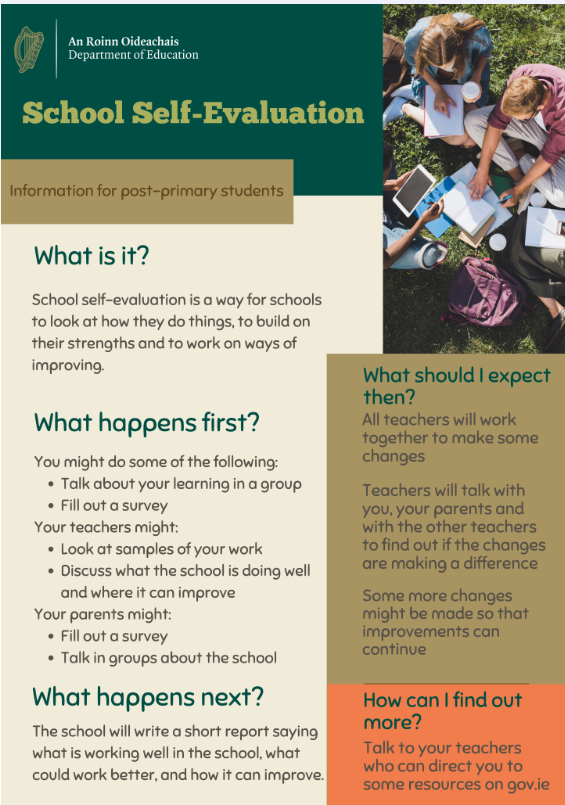
School Self Evaluation (SSE) is a process that influences the quality of education provided to students. SSE is a collaborative, inclusive and reflective process of internal school review. It involves gathering information from a range of sources, and then making judgements about practice and about how well students are doing.
The key focus of school self-evaluation is to bring about improvements in students’ learning
SSE is an ongoing process used to reflect on teaching and learning, identify strengths and weaknesses and find meaningful ways to improve. At St. Joseph’s, SSE helps us ensure that every student receives the highest quality learning experience in a positive, supportive environment.
SSE encourages teachers, students and parents to work together to set clear goals for improvement. Through gathering feedback, analysing data and reviewing our classroom practices, we can better understand what we do well and where we can further develop.
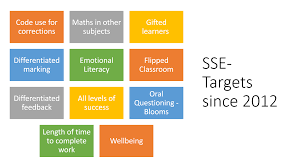
Each year, our school focuses on specific priority areas—such as literacy, numeracy, wellbeing, digital learning or teaching methodologies. We then set targets and implement practical strategies to support progress in these areas. This structured approach ensures that change is purposeful, effective and centred on student needs.
As SSE is a continuous cycle of reflection and enhancement, it strengthens the quality of teaching, deepens student engagement and helps create a school culture where growth, collaboration and excellence are at the heart of everything we do.
At St. Joseph’s Secondary School, Castlebar, School Self-Evaluation plays an essential role in shaping our vision for learning—today and for the future.
School Self-Evaluation

Year & Focus for St. Josephs
2021/2022
Wellbeing Promotion Review
2022/2023
Review of School Mission Statement
2023/2024
Assessment for Learning (as part of the TL21 initiative)
2024/2025
Assessment for Learning
2025/2026
Exam Preparation
School Self-Evaluation Process
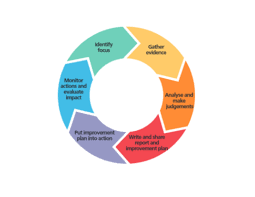
Step 1: Identify Focus
For this step, schools identify a curricular area or an aspect of teaching and learning to investigate. This will be based on their sense of context and where they feel their school might profitably explore opportunities for improvement.
Step 2: Gather Evidence
The types of evidence gathered will depend on the focus of the SSE. Evidence is collected from a variety of sources, including teachers, pupils, parents, and school management.
Step 3: Analyse and Make Judgements
In this step, the evidence collected in step 2 is analysed. Schools then use the statements of practice to make judgments on the aspects of provision that are already effective and identify those areas that need to be improved.
Step 4: Write and Share Report and Improvement Plan
In this step, the school prepares a short report and School Improvement Plan, based on the strengths and areas for improvement identified in step 3. The plan details the improvement targets and the actions that will help the school to bring about the improvements. The School Improvement Plan is shared with the school community.
Step 5: Put Improvement Plan Into Action
This is the most crucial part of the six-step process. This is where individual teachers, subject departments, and school leaders implement the agreed actions to bring about the desired improvement. This step will look different in every school.
Step 6: Monitor Actions and Evaluate Impact
This step is closely linked to step 5. As the improvement plan is being put into action, the school monitors the actions as they are rolled out. It is important to consider the experiences of teachers and learners as well as the impact of the changes on learning. Sometimes, there may be evidence to suggest that the targets and actions need to be adjusted, reframed or amended. This is all part of the improvement process.
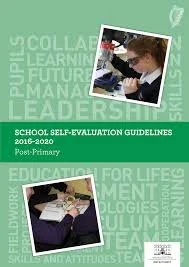
School Self-Evaluation Guidelines 2016 - 2020